Recently, I noticed that I was typing without looking at the keyboard. I have never learned touch typing or followed any finger-placement rules. Out of curiosity, I tried to pay conscious attention to how my fingers were moving and which keys they were pressing. Almost immediately, I started struggling. My typing slowed down and became less accurate.
That moment made something clear. I had learned this skill without ever being aware that I was learning it. There was no formal training and no deliberate practice. The ability had developed silently over time through repetition.
In other words, I learned to type without learning to type.
This simple experience is a practical example of how the brain adapts and automates repeated behaviours, often without our conscious involvement.
Learning Without Awareness: The Role of Neuroplasticity
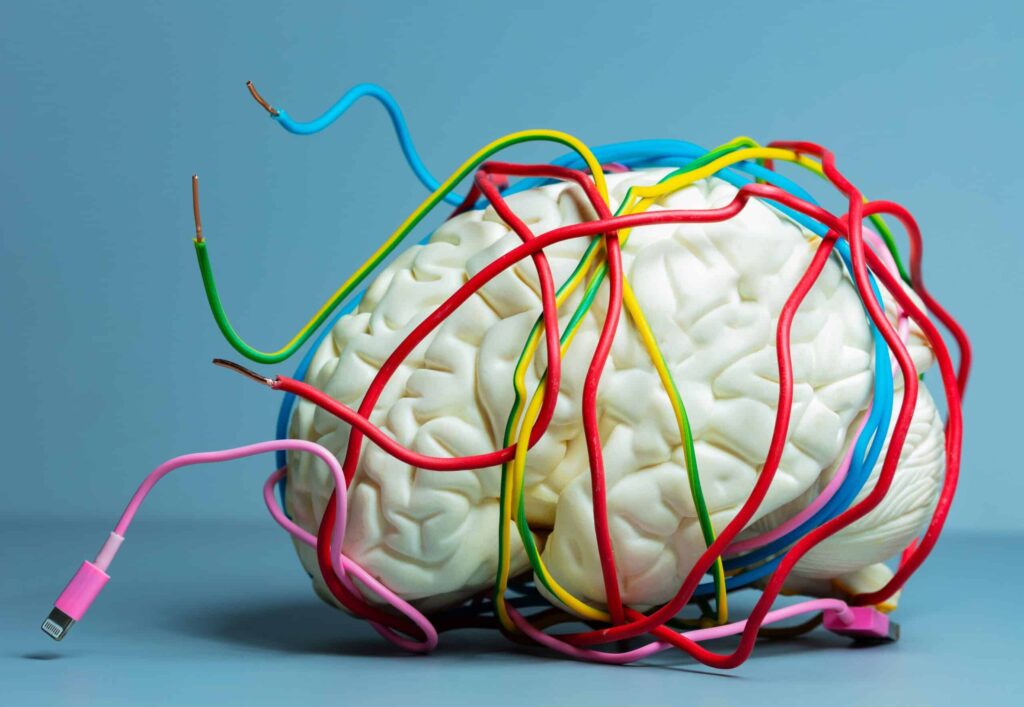
This process is driven by neuroplasticity – the brain’s ability to rewire itself based on repeated use. The brain does not change because we understand something intellectually. It changes because a particular neural pathway is used again and again.
Learning a musical instrument is a clear example. When someone starts playing the violin or piano, every movement requires attention. Finger placement, timing, pressure, and coordination feel unnatural. In the early stages, progress is slow and mentally tiring. With repeated practice, something shifts. The same fingers begin to move accurately without conscious planning. The player no longer thinks about each note or key. The brain has reorganised itself to support the task. What once required effort now happens automatically.
The same principle applies to typing. No one consciously memorises every key position. The brain learns patterns of movement, not individual instructions. Over time, these patterns are executed without awareness. Even the experienced musicians often struggle if they start overthinking their finger movements. Conscious interference disrupts an automated neural process that was built through repetition.
Neuroplasticity works whether we are aware of it or not. The brain keeps adapting to what we practise most, not what we intend to practise.
Consistency is not discipline; it is biology
Neuroplasticity explains why habits form and why they are hard to change. The brain does not respond to goals, motivation, or intention. It responds to repetition. Whatever behaviour is repeated gets reinforced at a neural level and gradually becomes automatic.
This is why lasting change whether in health, fitness, skill, or behaviour cannot be achieved through short bursts of effort. It requires consistent repetition over time. The brain adapts first, and behaviour follows.
Habits are not a matter of discipline. They are the outcome of neural wiring built through repeated actions. If the repetitions change, the wiring changes. And when the wiring changes, outcomes change.
Nothing meaningful is achieved overnight. But almost anything becomes possible when the right action is repeated often enough. After all, consistency is not discipline; it is biology